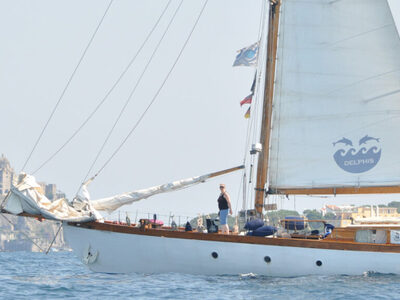
Conservation et surveillance des baleines et des dauphins en Italie
L'expérience
Identifier les zones critiques des cétacés est l'objectif principal du projet. Aidez-nous à l'enregistrement comportemental et acoustique des baleines et des dauphins, les observations, l'identification photographique et le tournage. Aidez l'équipage dans les tâches quotidiennes, y compris faire les courses, laver la vaisselle et l'entretien général du bateau.
Montez à bord de notre bateau pour une aventure en haute mer avec de nombreuses opportunités d'apprentissage !
C'est une opportunité unique d'en apprendre davantage sur les cétacés et d'être en contact avec la nature !
Ce que vous offrez
25 heures d'aide par semaine
Soins aux animaux:
Aider à surveiller et prendre soin des animaux.
Travail social:
Aider au travail bénévole dans des projets locaux et des communautés.
Frais supplémentaires requis
Montant:
€ 900
Par semaine
Les frais couvrent:
Avantages pour les voyageurs et Don au projet
Description:
The research project is almost exclusively supported by the financial contribution of project participants. The money you pay to participate in the program will be used to cover the project running costs (fuel for the boat, equipment, upkeep, etc.).
*Plus 150 Euros per week for for fuel and food*
Ce que vous recevez
2 jours de congé par semaine
Dortoir partagé:
Vous aurez un lit dans une chambre partagée, ce qui signifie que vous partagerez la même chambre avec d'autres voyageurs.
Utilisez notre cuisine équipée:
N'hésitez pas à utiliser notre cuisine et préparer vos propres délicieux repas.
Certificat:
Obtenez un certificat d'achèvement après avoir terminé votre expérience.
Exigences
Intermédiaire Italien ou Intermédiaire Anglais
Plus de 18 ans
Accueille les volontaires solo, les couples et les partenaires de volontaires
Ce qui n'est pas inclus
Vols, assurance voyage, transport interne et visa
Détails du programme
Arrival Day: Boarding takes place every Monday at 4:00 PM. On arrival day, there are no sea outings, and researchers are on board to welcome participants. Participants are encouraged to familiarize themselves with the boat and the surroundings and can take the opportunity to rest after the long journey on one of the beaches near the port. Once all participants are on board and settled, introductions are made, and all onboard living and safety rules are explained. Detailed explanations about the project, research (study area, present species, and their biology, etc.) follow.
Cetacean Monitoring Outings: Participants live aboard the research vessel, which primarily sails. During the stay, days are dedicated to research activities, and each participant contributes to fieldwork. Sea outings occur daily (excluding arrival and departure days). Routes are planned to cover the entire study area
Activités et horaires
Participants and researchers commit to observation duties in watch shifts, with two observers alternating in one-hour shifts to report the presence of marine life; in addition to whales and dolphins, sightings of sea turtles, tunas, swordfish, sunfish, rays, schools of fish, and seabirds are recorded. The acoustic system is capable of detecting dolphin sounds within a radius of about 3 miles: when a signal is detected, it is possible to determine the direction and approach the animals. At night, we usually return to the dock in the port. Sometimes, we spend the night anchored in the bay, and if the research requires it, we may also spend the night at sea.
Règles
We remind you that life on board a sailing vessel is a choice: a simple, communal, and eco-compatible lifestyle conserving energy and resources.
There is very little privacy, even behind the curtains of the cabins.
Nevertheless, the spaces are large enough, and the sea and the sky will offer you unlimited horizons; each watching shift will give you the possibility to taste the peace of sailing.