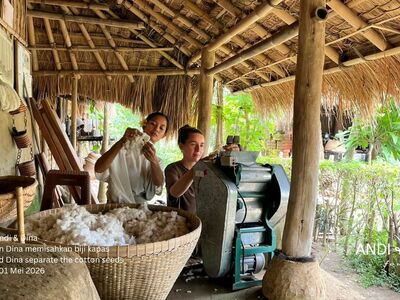
Cotton Ginning and Appropriate Technology
The experience
Join us in supporting sustainable cotton processing and rural innovation through the use of appropriate technology. This volunteer opportunity focuses on one of the most important stages of cotton production: separating cotton seeds from cotton fibers using simple, locally adapted tools and equipment.
What you offer
21 hours of help per week
Kitchen Hand:
Help prepare, finish and serve meals.
Social Work:
Help with volunteer work in local projects and communities.
Farming:
Plant crops, sow seeds and help in outside tasks.
Gardening:
Help grow plants and cultivate gardens
Additional fee required
Amount:
US$ 15
Per day
Fee pays for:
Benefits for travelers, Materials for volunteer activities, and Donation to project
Description:
Volunteer contributions for cover meals a day (breakfast, lunch, dinner), room, free laundry service, free wifi, free cooking class, free coffee and herbal drinks, donations to Arts and cultural Educational Institutions, sustainability project, daily activities with equipment.
What you get
1 day off per week
Private Room:
You will have a bed in a private room. In other words, a room just for you.
Breakfast:
You are entitled to a free breakfast, every day of your stay.
Lunch:
You are entitled to a free lunch, every day of your stay.
Dinner:
You are entitled to a free dinner, every day of your stay.
Free Laundry:
You can use our laundry room freely.
Free Hiking Tours:
We’ll take you on excursions and hikes around town. For free!
Get free drinks or beverages.:
Drink up! Get free and tasty drinks for yourself.
Yoga classes:
Take free yoga classes at our place.
Use our equipped kitchen:
Feel free to use our kitchen and make your own delicious food.
Certificate:
Get a certificate of completion after you finish your experience.
Fast Internet Access:
High-speed internet for you to work remotely
Dedicated Workspace:
Specific space for you to work remotely
Requirements
Beginner English
Welcomes solo volunteers, couples, and partners of volunteers
What's not included
Flights, Travel Insurance, Internal Transportation and Visa
Program Details
Volunteers will assist with the cotton ginning process, helping prepare harvested cotton, operate or support appropriate technology equipment, sort fibers and seeds, and document production results. This hands-on experience provides valuable insight into how rural communities combine traditional knowledge with practical technology to improve efficiency while preserving cultural heritage.
Beyond the technical process, volunteers will learn about the role of cotton in traditional textile production and how natural fibers move from the farm to the weaving process. The program highlights sustainable agriculture, community-based innovation, and the preservation of local textile traditions.
Activities & Shift
Volunteer Tasks:
Assist with separating cotton seeds from cotton fibers using appropriate technology.
Prepare and organize cotton before and after processing.
Sort and store cotton fibers and seeds.
Help record processing results and basic production data.
Support the maintenance and cleanliness of equipment and workspaces.
Assist with documentation and educational activities.
Learn about traditional cotton and textile production systems.
Rules
About the Experience:
This program is ideal for travelers, students, researchers, makers, textile enthusiasts, and anyone interested in sustainable agriculture and appropriate technology. By participating, you will contribute to a community effort that strengthens local cotton production while preserving traditional knowledge and textile heritage.
Through this experience, you will gain practical skills, learn from local communities, and discover how simple technologies can create meaningful impacts in rural development and cultural preservation.
What You Will Learn:
How appropriate technology is used in cotton processing.
The cotton ginning process from harvest to fiber preparation.
Basic production recording and documentation methods.
The connection between cotton farming and traditional textiles.
Sustainable and community-based agricultural practices.
The importance of preserving textile heritage through local innovation.