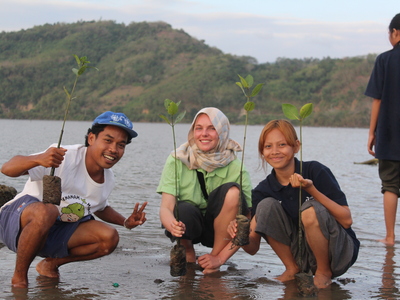
Social & Economic Research | Bagek Kembar Mangrove Ecotourism
The experience
Join a community-based research project in Bagek Kembar Mangrove Ecotourism, Lombok, exploring household income, livelihoods, economic shocks, and factors that make families vulnerable. Conduct respectful household interviews, document livelihood activities, and identify coping strategies and local resilience.
What you offer
18 hours of help per week
Social Work:
Help with volunteer work in local projects and communities.
Additional fee required
Amount:
US$ 15
Per day
Description:
The $15/day fee covers accommodation, daily breakfast, research materials, local transportation during fieldwork, and research coordination. Lunch and dinner are not included but can be arranged and purchased from local community members. The fee supports the practical costs of conducting respectful, community-based research in Bagek Kembar.
What you get
2 days off per week
Private Room:
You will have a bed in a private room. In other words, a room just for you.
Breakfast:
You are entitled to a free breakfast, every day of your stay.
Free Laundry:
You can use our laundry room freely.
Free Tours:
We’ll take you on tours and rides around town. For free!
Use our equipped kitchen:
Feel free to use our kitchen and make your own delicious food.
Certificate:
Get a certificate of completion after you finish your experience.
Basic Internet Access:
Basic speed internet for you to work remotely
Requirements
Intermediate English or Intermediate French
Between 18 and 45 years old
Welcomes solo volunteers, couples, and partners of volunteers
Be from outside Indonesia
European Union Passport
United States visa or citizenship
Travel insurance
What's not included
Flights, Travel Insurance, Internal Transportation and Visa
Program Details
Join a community-based social and economic research project in Bagek Kembar, Lombok. Volunteers will work with the local research team to understand how households earn income, manage livelihoods, and respond to economic challenges.
You will help conduct structured household interviews with local residents, document different livelihood activities, and explore factors that may contribute to economic vulnerability. Topics may include income sources, employment, livelihood diversification, household assets, access to services, economic shocks, financial pressures, coping strategies, and local resilience.
No previous research experience is required. Volunteers will receive an introduction to the questionnaire, interview techniques, informed consent, confidentiality, and responsible fieldwork before conducting interviews.
The goal is to collect respectful, useful community-level information that can support future sustainable livelihood and conservation planning in Bagek Kembar.
Activities & Shift
Monday — Research Orientation
Introduction to the research objectives, questionnaire, field methods, informed consent, confidentiality, and interview practice.
Tuesday — Household Interviews
Conduct supervised interviews with selected households about household characteristics, occupations, income sources, and livelihood activities.
Wednesday — Economic Vulnerability
Continue interviews focusing on economic pressures, income changes, financial challenges, economic shocks, and access to resources and services.
Thursday — Coping & Resilience
Explore how households respond to economic difficulties, including additional income activities, savings, borrowing, family support, and other coping strategies.
Friday — Data Organization & Reflection
Review completed questionnaires, organize anonymized information, identify recurring themes, and discuss preliminary observations with the research team.
Saturday — Free Day
Sunday — Free Day
Volunteer commitment: approximately 20 hours per week.
Rules
Obtain informed consent before every interview.
Respect each participant's right to refuse or stop an interview.
Never pressure anyone to disclose income, financial, family, or other sensitive information.
Keep all personal and household information confidential.
Do not photograph, record, or publish identifiable participants without permission.
Do not share research data outside the approved research team.
Ask questions exactly as instructed and avoid influencing participants' answers.
Respect local culture, customs, privacy, and community schedules.
Be punctual and communicate with the research coordinator about fieldwork or absences.
Maintain a neutral, respectful, and non-judgmental attitude toward all participants.