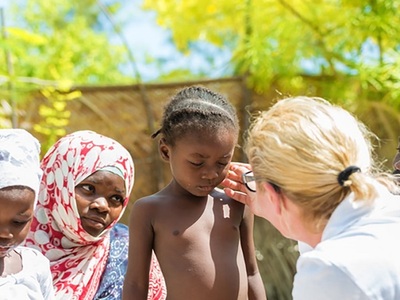
Medical Volunteer Program in Ghana
The experience
Following Ghana’s independence in 1957, the country introduced a tax-funded healthcare system that provided free public healthcare services, similar to the National Health Service (NHS) in the United Kingdom. However, over the following decades, the system became increasingly financially unsustainable, leading to the introduction of healthcare charges in the 1970s.
What you offer
18 hours of help per week
Elderly Care:
Assisting and spending time with the elderly.
Child Care:
Caring for, playing with, and spending time with children.
Social Work:
Help with volunteer work in local projects and communities.
Additional fee required
Amount:
US$ 20
Per day
Fee pays for:
Materials for volunteer activities and Donation to project
Description:
All volunteers / interns pay 20 USD per day
all-inclusive volunteer fee include:
Accommodation
Breakfast and dinner
Airport pickup and Airport drop-off, if applicable
Orientation and cultural briefing
Placement in the volunteer project
Local coordinator/support
Emergency assistance
Wi-Fi/basic utilities where available
Certificate of participation
Pre-arrival assistance
What you get
2 days off per week
Private Room:
You will have a bed in a private room. In other words, a room just for you.
Shared Dorm:
You will have a bed in a shared room, which means you will share the same room with other travelers.
Team Dorm:
You will have a bed in a shared room, which means you will share the same room with other people.
Breakfast:
You are entitled to a free breakfast, every day of your stay.
Dinner:
You are entitled to a free dinner, every day of your stay.
Discounts on Tours:
Get discounts for tours and excursions around town.
Pick Up:
We will pick you up when you arrive, and take you to our property.
Language lessons:
Take free language classes at our place.
Use our equipped kitchen:
Feel free to use our kitchen and make your own delicious food.
Certificate:
Get a certificate of completion after you finish your experience.
Fast Internet Access:
High-speed internet for you to work remotely
Requirements
Welcomes solo volunteers, couples, and partners of volunteers
What's not included
Flights, Travel Insurance, Internal Transportation and Visa
Program Details
Since the introduction of the National Health Insurance Act in 2003, Ghana has made considerable progress in improving access to healthcare. The National Health Insurance Scheme (NHIS) was established to make essential healthcare services more accessible and affordable. Nevertheless, significant challenges remain, particularly in rural and remote communities, including the area where you will be based during your medical volunteering placement.
Many patients attending hospitals each day suffer from illnesses associated with unsafe drinking water, inadequate sanitation and malaria. These conditions can often be prevented or managed more effectively through improved public health education, early diagnosis and timely treatment. Other infectious diseases, including HIV/AIDS, yellow fever, cholera, typhoid and measles, also continue to place pressure on healthcare services and affect communities across Ghana.
Access to medical care can be particularly challenging in rural areas, where poor road infrastructure and long travel distances make reaching healthcare facilities difficult and time-consuming. Financial constraints, cultural beliefs, traditional healing practices and limited access to health education may also influence when and where people seek treatment. Consequently, some patients delay visiting hospitals until their conditions have become more serious, increasing the risk of complications that could potentially have been avoided.
As a medical volunteer at Dixcove Hospital, you will have the opportunity to gain first-hand insight into the challenges faced by healthcare professionals working in a resource-limited environment. You will develop a deeper understanding of how social, economic and cultural factors influence health outcomes, while observing the importanc
Activities & Shift
We can arrange placements for participants across the following departments: General Medicine, Paediatrics, Obstetrics, Gynaecology, Antenatal Care, Postnatal Care, Labour Room, Neonatal Intensive Care Unit (NICU), Outpatient Department (OPD), Accident and Emergency (A&E), Surgery, Anaesthesia, Ear, Nose and Throat (ENT), Ophthalmology, Wound Care, Public Health, Mental Health, Chronic Disease Management, Laboratory, Radiology, and Pharmacy.