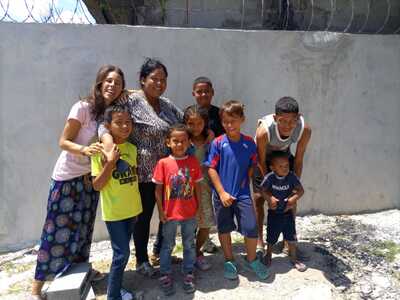
School and educational support at home and in the schools
The experience
Collaborate in school support for children at home or in the schools of Chame. Help with school tasks, reinforce their knowledge, support teachers, and develop educational and creative activities that promote learning.
What you offer
6 hours of help per day
Arts:
Help with painting, graffiti, sculpting or drawing.
Social Work:
Help with volunteer work in local projects and communities.
Teaching Languages:
Teaching a language to the host, guests, or local communities.
Additional fee required
Amount:
US$ 27
Per day
Fee pays for:
Materials for volunteer activities and Donation to project
Description:
The daily contribution of $27 covers accommodation, the three meals, expenses for project activities, donations to the community, and management and operating costs.
What you get
2 days off per week
Shared Dorm:
You will have a bed in a shared room, which means you will share the same room with other travelers.
Breakfast:
You are entitled to a free breakfast, every day of your stay.
Lunch:
You are entitled to a free lunch, every day of your stay.
Dinner:
You are entitled to a free dinner, every day of your stay.
Free Laundry:
You can use our laundry room freely.
Use our equipped kitchen:
Feel free to use our kitchen and make your own delicious food.
Certificate:
Get a certificate of completion after you finish your experience.
Fast Internet Access:
High-speed internet for you to work remotely
Requirements
Intermediate Spanish or Intermediate English
Between 18 and 66 years old
Welcomes solo volunteers, couples, and partners of volunteers
Travel insurance
Mandatory volunteer introduction video
What's not included
Flights, Travel Insurance, Internal Transportation and Visa
Program Details
Our program aims to support the learning and educational development of boys and girls of different ages in the Chame district, Panama, especially those who need academic reinforcement.
The program has two collaboration modalities:
Home-based school support
Volunteers will visit the children in their homes to help with homework, reinforce reading, writing, mathematics and other subjects, as well as develop educational activities tailored to their age and learning level.
Educational support in schools
Volunteers will collaborate directly with teachers in the classrooms, helping students with their school activities, preparing educational materials and providing individual or group support. They may also collaborate in special education support classrooms, under the guidance of the responsible staff.
It is important to understand that the volunteer supports the teacher, but does not replace them.
Initiative and educational workshops
We want volunteering to be a space for learning, sharing and enjoying. Therefore, each volunteer must present, before their arrival, a proposal for an activity or workshop related to their profession, knowledge, skills or hobbies.
Some proposals may be related to art, music, English, recycling, the environment, emotional education, gardening, educational games or body expression.
Activities should be pre-coordinated and approved, taking into account the children's ages, available resources and educational needs.
The assignment of activities in homes or schools will depend on the project needs during the volunteer stay.
Activities & Shift
Volunteer activities take place from Monday to Friday. Schedules and tasks will depend on the collaboration modality assigned and on the project's needs during the volunteer's stay.
Home-based school support
The volunteer will visit the children in their homes to help them with homework, reinforce knowledge and carry out educational activities adapted to their ages and needs.
Indicative schedule:
Morning: 9:00 to 11:00 h.
Afternoon: 14:30 to 16:30 h.
These schedules may be adjusted according to the families' availability and the children's school hours.
Educational support in schools
The volunteer will collaborate with teachers in classroom activities, the preparation of educational materials, and the individual or group accompaniment of students.
Schools operate in two shifts:
Morning shift: 7:00 to 12:00 h.
Afternoon shift: 12:20 to 17:20 h.
The volunteer will be assigned to one of these two shifts, according to the needs of the educational center.
Complementary activities
Volunteers may also prepare workshops, games and educational activities related to their knowledge, skills or hobbies, after coordination and approval.
Planning of these activities should not interfere with the hours of collaboration assigned.
It is important to have flexibility, initiative, responsibility and adaptability, since programming may vary according to the needs of the children, the families, the teachers and the project.
Rules
To ensure the smooth operation of the project and a positive experience for everyone, volunteers must respect the following rules:
Commitment and punctuality: comply with the schedules and activities assigned, notifying in advance any absence or unforeseen event.
Respect: maintain appropriate treatment with the children, families, teachers, colleagues and project managers.
Educational responsibility: prepare activities in advance, taking into account the age, abilities and needs of each child.
Respect for teachers: follow their instructions and respect the methodology and the rules of each educational center. The volunteer supports the teacher, but does not replace them.
Respect for families: respect their homes, customs, schedules, privacy and rules of coexistence.
Protection of minors: maintain appropriate conduct and respect the personal and emotional limits of the children. No type of violence, discrimination, humiliation or punishment will be allowed.
Privacy and confidentiality: do not take or publish photographs or videos of minors without the corresponding authorizations, nor disclose personal information about the children and their families.
Gifts and donations: do not give money, gifts or materials directly to the children or their families without first consulting the project coordination.
Clothing: wear appropriate clothing for the school environment and home visits.
Care of resources: use educational materials responsibly, avoiding waste and leaving spaces clean and organized.
Initiative and autonomy: show willingness to prepare activities, contribute ideas and collaborate without needing constant instructions.