Bird conservation support
The experience
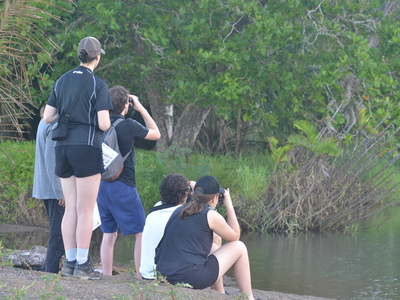
Did you know that birds are bioindicators of ecosystems? Come help us monitor them and learn about their biology and conservation to preserve the health of the lagoon.
Our accommodation is nestled in nature, deep within the jungle, just a 5-minute walk from the beach. It features a rustic volunteer house with shared rooms and a common area for relaxation, work, and socializing with other volunteers.
Visit us: https://www.naturavivaproject.com/
What you offer
15 hours of help per week
Animal Care:
Help look after and take care of animals.
Gardening:
Help grow plants and cultivate gardens
Cleaning:
Help clean the kitchen, bedrooms, bathrooms and common areas.
Social Work:
Help with volunteer work in local projects and communities.
Additional fee required
Amount:
US$ 30
Per day
Fee pays for:
Benefits for travelers, Materials for volunteer activities, and Donation to project
Description:
Volunteers will pay a $30 per night fee to cover meals, the electric generator, cleaning, maintenance, etc.
What you get
2 days off per week
Shared Dorm:
You will have a bed in a shared room, which means you will share the same room with other travelers.
Breakfast:
You are entitled to a free breakfast, every day of your stay.
Lunch:
You are entitled to a free lunch, every day of your stay.
Dinner:
You are entitled to a free dinner, every day of your stay.
Discounts on Tours:
Get discounts for tours and excursions around town.
Free Hiking Tours:
We’ll take you on excursions and hikes around town. For free!
Free Events:
Get free entrance for the best events in town.
Permaculture Course:
Take part in our Permaculture course for free.
Certificate:
Get a certificate of completion after you finish your experience.
Fast Internet Access:
High-speed internet for you to work remotely
Dedicated Workspace:
Specific space for you to work remotely
Requirements
Beginner English or Beginner Spanish
Over 18 years old
Welcomes solo volunteers, couples, and partners of volunteers
What's not included
Flights, Travel Insurance, Internal Transportation and Visa
Program Details
Our conservation project works in four areas simultaneously sea turtles, bird monitoring, coastal monitoring, and permaculture. Activities vary slightly depending on the time of year you wish to visit. However, during both seasons, we offer two theoretical training sessions: one on bird monitoring and another on sea turtle biology. We also offer workshops such as coconut cheese making, seed bomb making, and tropical fruit tasting.
Regarding the activity schedule, during the dry season, we work Monday through Friday mornings. On bird monitoring days, we begin at 6 a.m. and take a break from 8 a.m. to 9 a.m. for breakfast, after which we carry out one of the other activities mentioned. During the rainy season, we work Monday through Friday, but the schedule sometimes changes due to night patrols.
Volunteers can expect to receive guidance, basic training, and support throughout their stay. We aim to create a meaningful experience where participants not only contribute to conservation efforts but also learn about bird identification, ecosystem dynamics, and environmental awareness.
Highlights:
- Participate in outings to observe, identify, and record species in their natural habitat.
- Experience sunrises surrounded by tropical birds in a privileged setting, developing a deeper awareness of the ecosystem.
- Receive training on species, threats and conservation techniques.
- Learn to identify birds by their song, behavior, and physical characteristics.
- It contributes to real-world databases that help study populations and changes in biodiversity.
Activities & Shift
During the dry season, the number of turtles arriving on the beach to lay their eggs is much lower, reduced to one or two turtles per month. Therefore, we no longer conduct night patrols. During December and January, hatchlings can still be seen emerging. The rest of the year, volunteers help us with daytime walks during the week to detect turtle tracks or activity. If any are found, we go together to relocate the nest to another area of the beach. As the season approaches, in May and June, designated areas are set up on the beach, signs about the nesting season are posted, and volunteers sometimes help with changing the sand in the hatchery. As for the bird program, it consists of observing and learning about bird behavior, identifying birds, collecting and studying data, and planting native plants that birds use for food or shelter. Coastal monitoring consists of weekly beach cleanups, during which the waste found is analyzed, and sea level rise and sand erosion are studied. Regarding the fourth pillar, permaculture, compost is produced and organic waste is managed, natural fertilizers and eco-friendly repellents are made, and soil care and basic garden maintenance are carried out
During the wet season:
Turtle Program: Two night patrols are conducted weekly throughout the season. Patrols typically take place between 8 p.m. and midnight. The turtle hatchling release and exhumation season begins in September.
Bird Program: During this season, the number of bird monitoring sessions per week is reduced as we focus on night patrols, and the river's opening sometimes hinders this activity. However, we continue to conduct them.
Permaculture work and coastal monitoring remain unchanged; they are the same in both seasons.
Rules
Please note that volunteers are required to bring their own binoculars for bird monitoring activities, as this is an essential tool for accurate observation, and red lights during the sea turtle season